
The shipwreck in Kalamitsi.
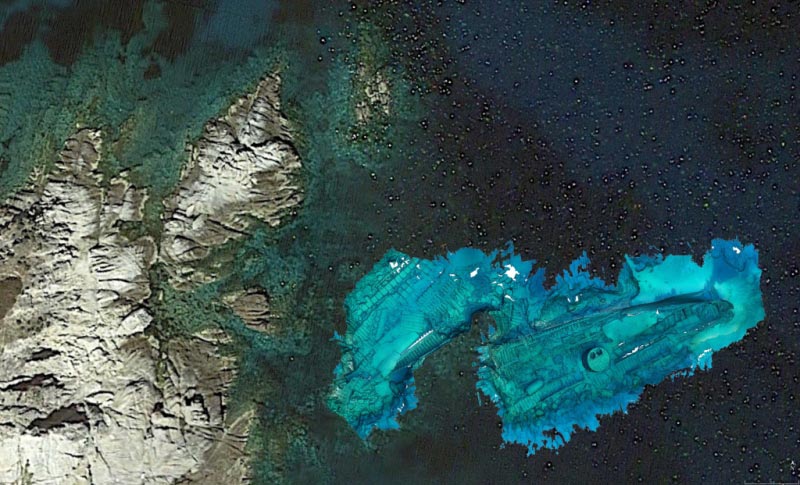
The shipwreck in Kalamitsi. In October 2017, a team of underwater surveyors collaborated with the Dolphin Dive Center in Kalamitsi, Halkidiki, to identify and document a shipwreck located near the area. This wreck, often referred to by locals as the “Turkish” shipwreck, is situated off the coast of Kalamitsi, approximately 600 meters east of the main beach and 200 meters from a smaller beach, at coordinates 39°59’31.70″ N 23°59’55.80″ E. The ship lies in two sections, separated by sharp underwater rocks that rise to about half a meter below the surface. The stern section remains largely intact at a maximum depth of 17.5 meters, resting on its port side, while the bow section is more fragmented, with its sides spread out on the seabed at a maximum depth of 5.8 meters. Measurements of the keel suggest the vessel was approximately 70 meters in length.
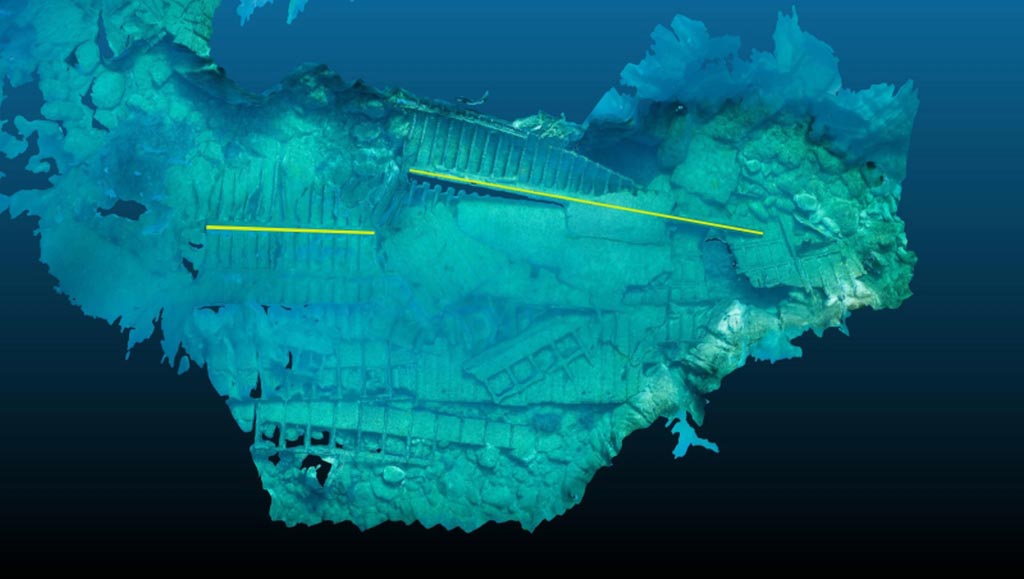
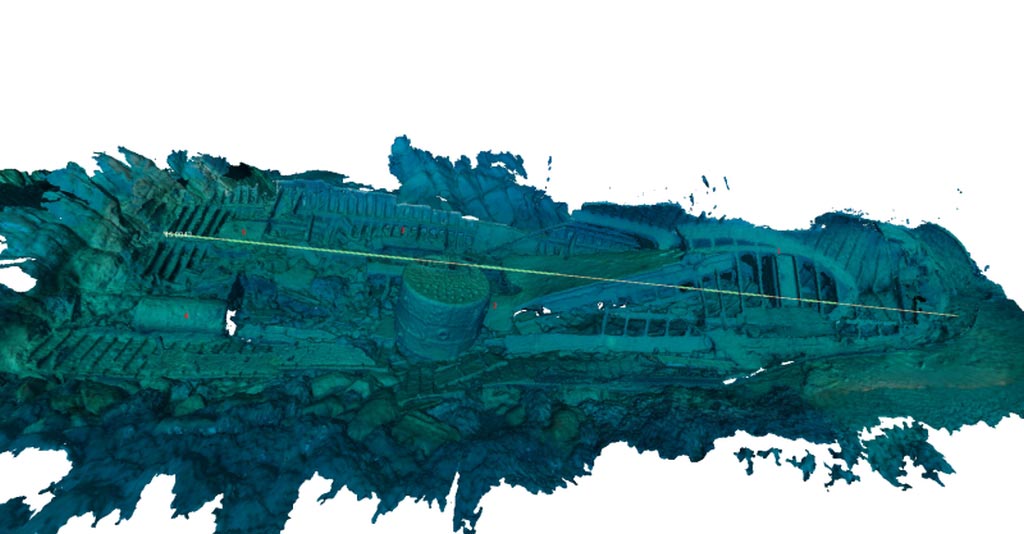
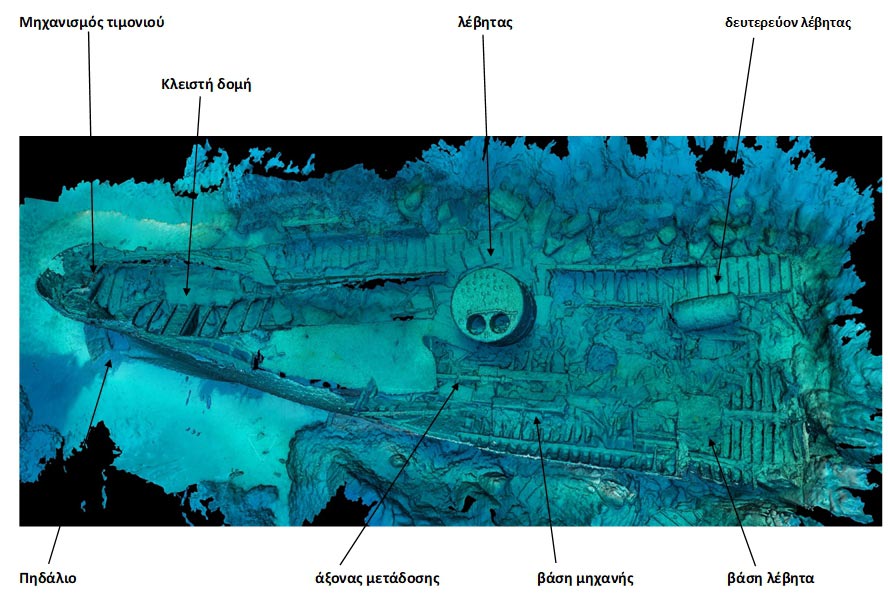
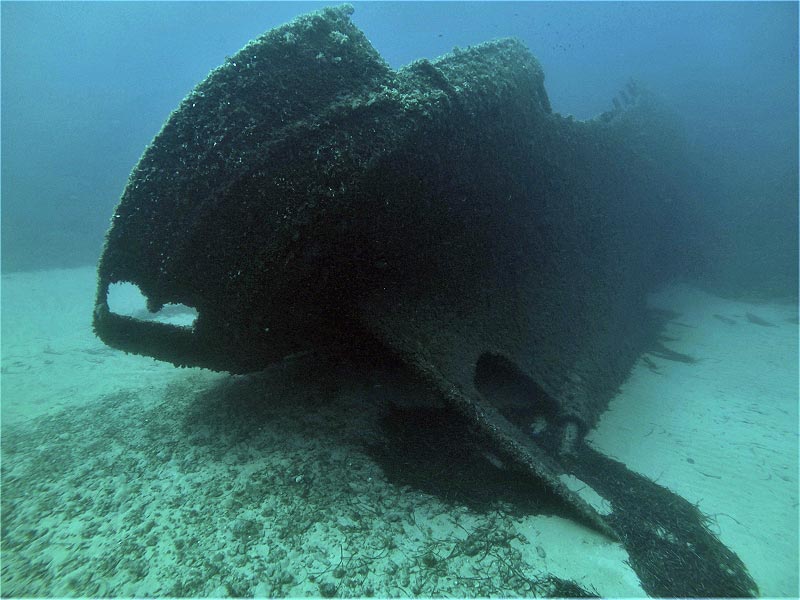
The stern features a removed propeller and a visible steering mechanism on the deck. The deck near the steering area has collapsed, revealing a compartment containing anthracite coal, likely used as fuel. The port side houses a cylindrical Scotch boiler with two furnaces, which has settled upright with its furnaces facing upward. The starboard side has collapsed, covering parts of the propulsion shaft. The engine has been removed, but its base and the cut transmission shaft are still present, indicating the machinery was salvaged.
Local accounts suggest the wreck dates back to before the 1922 Asia Minor Catastrophe, as refugees found it already present upon their arrival. It’s said that the crew sought help from residents of nearby Sykia, who, upon discovering the ship’s Turkish origin, allegedly attacked and killed them. Another version mentions some crew members hiding in the village church, only to be pursued and killed there, causing significant unrest in the area.
The ship is believed to have run aground on the rocky coast, after which locals salvaged usable materials. Due to the area’s inaccessibility, transporting large parts overland was challenging, so materials were likely moved by boat to Sykia’s beach. Over time, as the ship was stripped and subjected to weather conditions, it eventually broke into two sections and settled in its current underwater position.
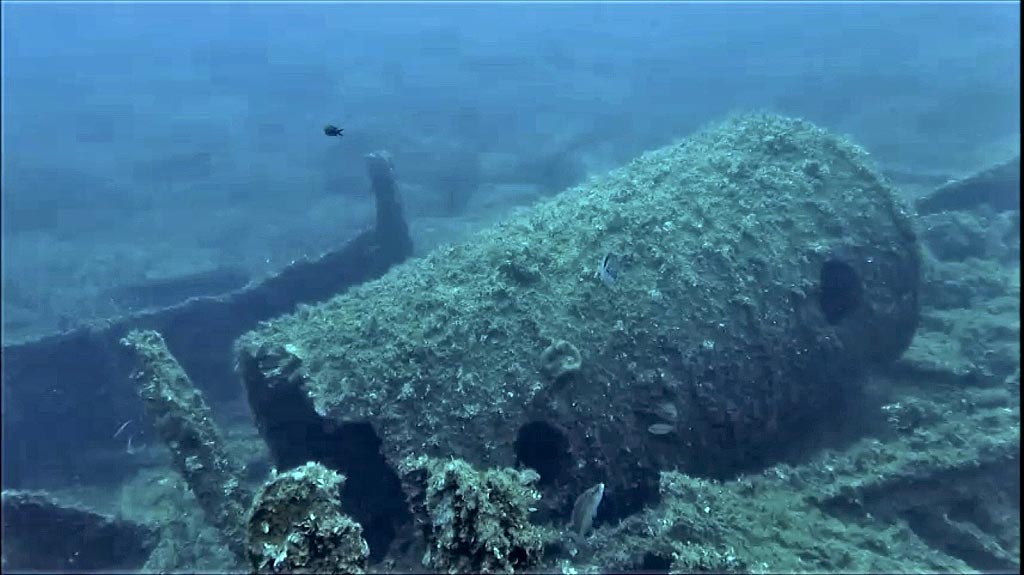
The main boiler is a typical cylindrical Scotch boiler with a diameter of 4.1 meters and a length of 3 meters, featuring two plain furnaces without corrugation. It has 18 stay nuts, each 17 centimeters in diameter, with bolts measuring 9 centimeters across. The boiler comprises three cylindrical sections joined with double rows of rivets. A safety valve opening is located at the top.
Adjacent to the main boiler lies the auxiliary (donkey) boiler, measuring 3.5 meters in height and 1.7 meters in diameter. It features five stay nuts on top, a central smokestack, and three fire tubes, each 22.86 centimeters in diameter. The firebox stands 2.15 meters tall. Based on these dimensions, it’s estimated that this boiler could produce between 12 to 16 horsepower.
The underwater survey team extends their gratitude to Vasilis Pargas and the Dolphin Diving Center Kalamitsi for their support during the dives, and to Nikos Lestos for his calculations and insights regarding the boilers.
The shipwreck in Kalamitsi
Credits: Wreck History
Nikolas Sidiropoulos was born on June 28, 1977, in Thessaloniki. In 2002, he earned his first CMAS star and began his involvement with diving. He is engaged in the team's historical and archival research, as well as underwater filming.
Search
Latest Posts
What are you interested in?