
The Shipwreck of P.L.M. 24: A Silent Witness Beneath the Aegean
Research: Nikolaos Sidiropoulos
Beneath the turquoise waters off the eastern coast of Central Greece lies a relic of industrial ambition and wartime upheaval — the shipwreck of the P.L.M. 24. Though now partially buried in the sandy seabed of Paltziki beach near Cape Sepias, this steel leviathan was once a proud coal transport vessel, launched in 1921 from the Raylton Dixon shipyards in Middlesbrough, England.
Originally commissioned by the French railway company Paris-Lyon-Méditerranée (P.L.M.), the vessel was a marvel of its time. Measuring over 125 meters in length and capable of carrying 5,700 tons, it embodied early 20th-century advances in cargo ship design. Its cantilever hull structure was both innovative and functional, allowing for vast open holds capable of carrying everything from coal to locomotive parts.
As with many ships of its era, the P.L.M. 24’s story took a darker turn during World War II. On December 17, 1942, the ship was requisitioned by German forces in the port of Port-de-Bouc, France. Renamed PERIGORD and operated by Deutsche Mittelmeer Reederei, it served the Axis powers across the Mediterranean. Despite the official name change, seafarers and dockworkers often continued to refer to her simply as “P.L.M. 24.”
Her final voyage came to an abrupt end in the waters of the Aegean Sea. While navigating near Cape Sepias, the ship struck a naval mine — a tragic yet common fate for many vessels in these heavily contested waters. In a desperate attempt to save the vessel, the crew beached it along the coast. Although some of its structure survived the explosion, much of the ship was gradually dismantled after the war, and the remaining parts slipped beneath the surface, quietly absorbed by the Greek shoreline.
Decades later, remnants of the P.L.M. 24 were rediscovered and studied by the Underwater Survey Group. Through meticulous research and the use of archival documents and geometric verification techniques, they were able to identify the remaining structure — a rare feat given the passage of time and natural erosion.
Today, the site of the wreck serves not only as a point of historical interest but also as a haunting reminder of how industry, war, and geography collide. Though it no longer sails, the P.L.M. 24 endures as a monument to the complexities of European history and the lives entwined with it — both above and below the surface.
For those interested in a more immersive experience, a video dive into the wreck is available, offering stunning underwater footage and insights into its current condition:
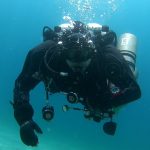
Nikolas Sidiropoulos was born on June 28, 1977, in Thessaloniki. In 2002, he earned his first CMAS star and began his involvement with diving. He is engaged in the team's historical and archival research, as well as underwater filming.
Search
Latest Posts
What are you interested in?